The Problem
A proven technology with one flaw that has limited it for decades.
Electrocoagulation is not new. The first patents go back more than a century, and the chemistry is well understood. Pass a current through sacrificial metal electrodes in water, and the metal releases ions that bind to contaminants and pull them out of suspension. It handles a wide range of pollutants, and it does it without the continuous coagulant chemicals that conventional treatment needs. On paper, it should be everywhere.
The catch: passivation
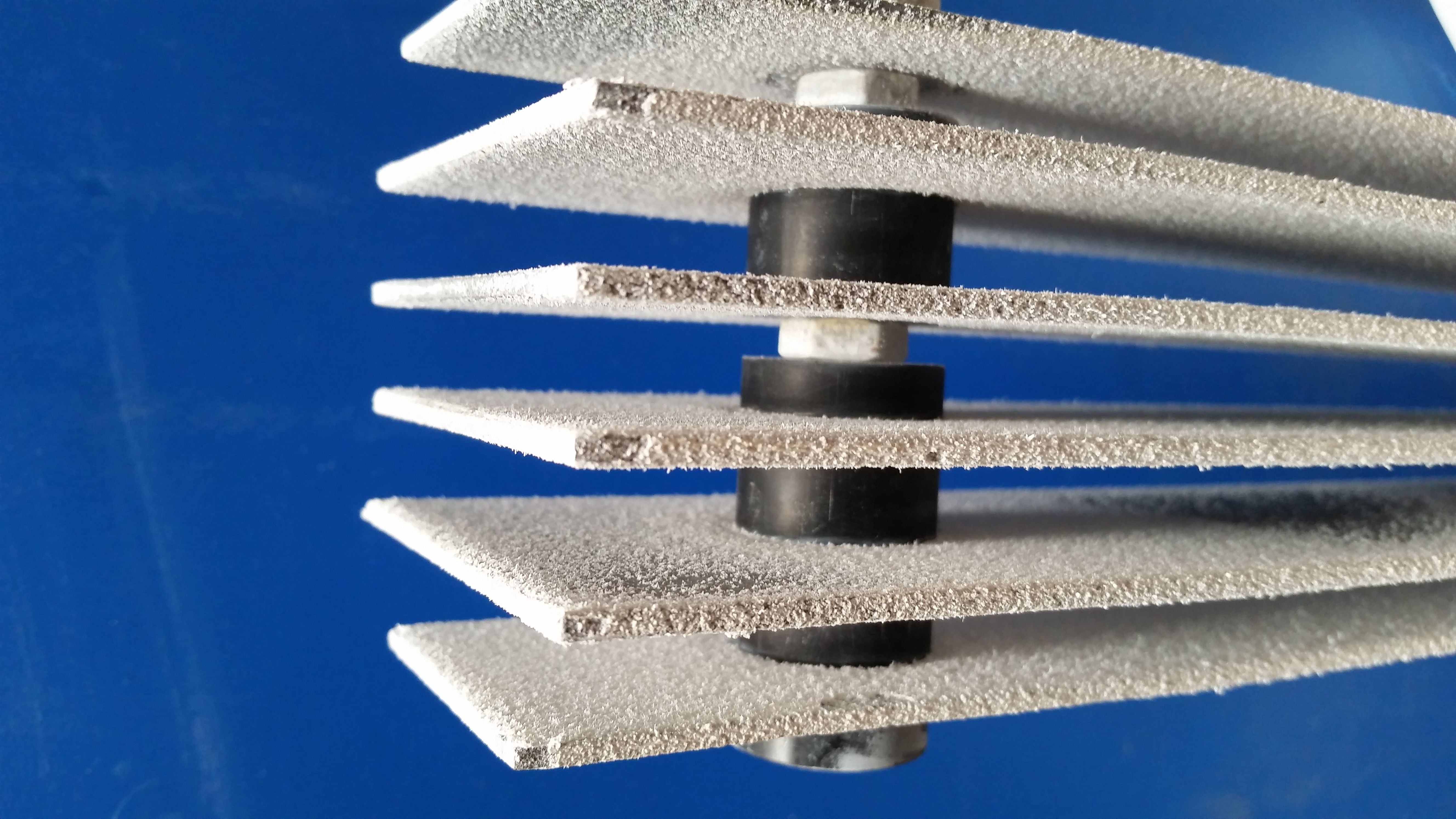
Here is what has held it back. As the electrodes do their job, their surfaces build up an insulating layer of oxides and scale. Engineers call this passivation. The coating raises electrical resistance, which means more energy for less treatment. Left alone, performance keeps dropping until the plates stop working.
The standard fix is to take the system offline, dissolve the buildup with an acid soak, then reassemble and restart. That means downtime, chemical handling, added labor, and a treatment process that stops every time the electrodes need attention. For a plant that has to treat water around the clock, a system that stops on a schedule is a hard sell.
Why plates make it worse
Conventional electrocoagulation uses stacks of flat metal plates. The shape that makes plates easy to build is the same shape that makes passivation unavoidable. The surface sits still, byproducts settle and stick, and nothing clears the scale while the system runs. The bigger the system, the more plates, the more surface to foul, and the more maintenance it demands. The technology's biggest limitation is built into its basic geometry.
Side by side
Conventional Plate EC vs. ECI CFEC
The comparison reflects the design differences between the two approaches. See the Technology page for how CFEC removes passivation at the source.